
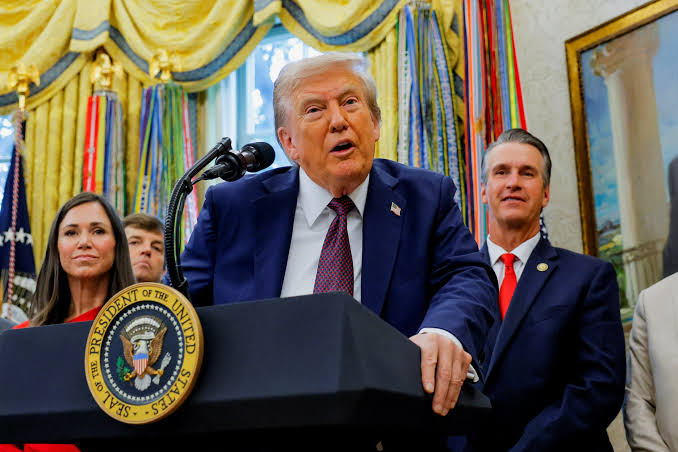
Following days in the shadows—and a wave of online speculation—President Donald Trump made a staged return to the public eye, intending to quell swirling health conspiracies. But instead of calming nerves, his appearance only amplified concerns.
A Media Spectacle Fueled by Conspiracy Theories
After skipping public events for an extended stretch over Labor Day weekend, speculation spiraled across social media: hashtags like #TrumpIsDead and #WhereIsTrump surged in popularity, accompanied by viral memes and TikToks spreading death rumors. The absence, coupled with images of bruising on his hand and swollen ankles, intensified the chatter.
The Appearance That Backfired
In a bid to reestablish presence, Trump appeared publicly—though not without drawing even more attention:
He wore heavy makeup on his right hand, likely intended to camouflage visible bruises.
He stood behind a podium that possibly concealed swollen ankles, fueling further suspicion.
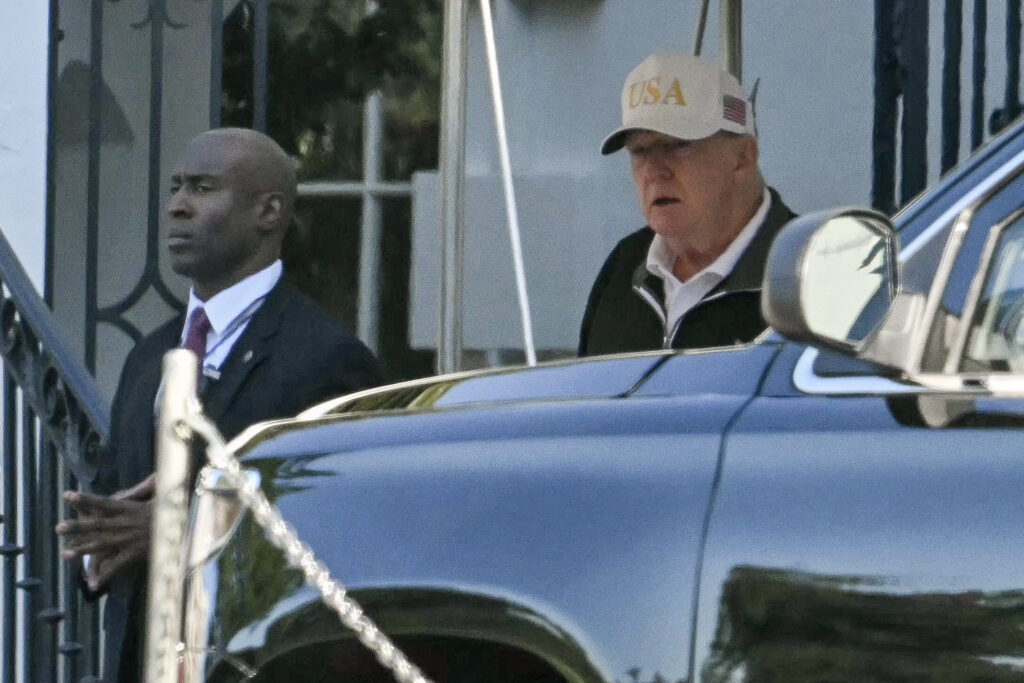
Despite these optics, Trump directly dismissed the rumors as “fake news”, boasting he had been quite active over the weekend, including playing golf and conducting interviews.
Medical Explanations and Persistent Doubts
The White House maintains that Trump isn’t seriously ill, attributing the bruise to frequent handshaking and aspirin use, and explaining the ankle swelling as a sign of chronic venous insufficiency (CVI)—a common, non-life-threatening condition for older adults.
However, this account hasn’t quieted public doubt. The makeup, podium shielding, and erratic public timeline have only intensified speculation—exposing a deep skepticism toward official explanations.
Final Thoughts
President Trump’s attempt to address health rumors was dramatic—but it inadvertently cast shadows on his explanations. In a media environment where visuals are scrutinized, transparency and authenticity are more necessary than ever.

