
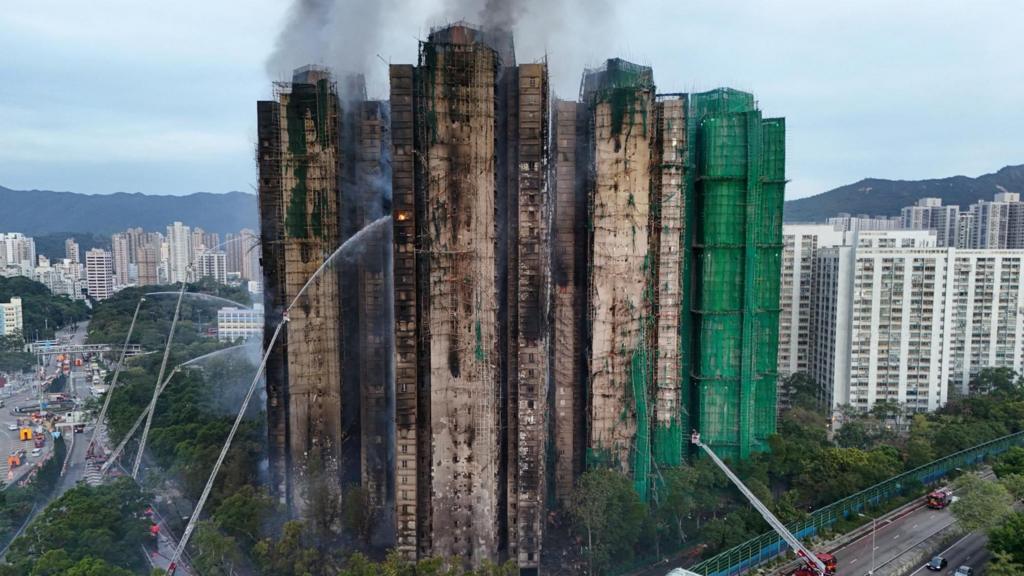
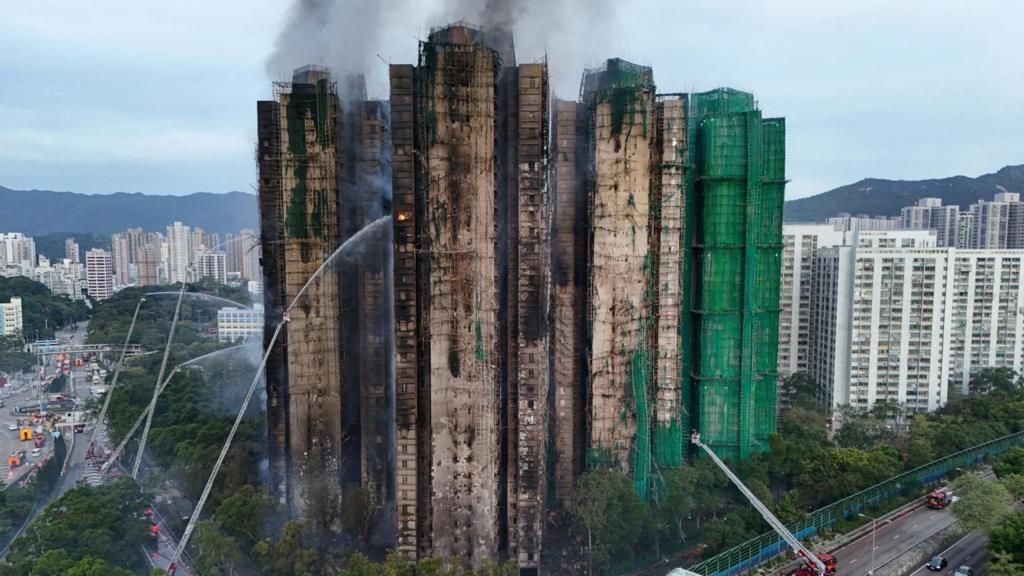
A catastrophic fire has ripped through a residential high-rise complex in Hong Kong, marking one of the deadliest apartment fires in the city’s recent history. The disaster at Wang Fuk Court in the Tai Po district has raised urgent questions about building safety standards and fire-hazard prevention in the densely populated city.
🔥 What Happened — The Hong Kong Apartment Fire Unfolds
The fire broke out on November 26, 2025, at around 2:15 p.m. local time at Wang Fuk Court, a large housing estate composed of several high-rise towers.
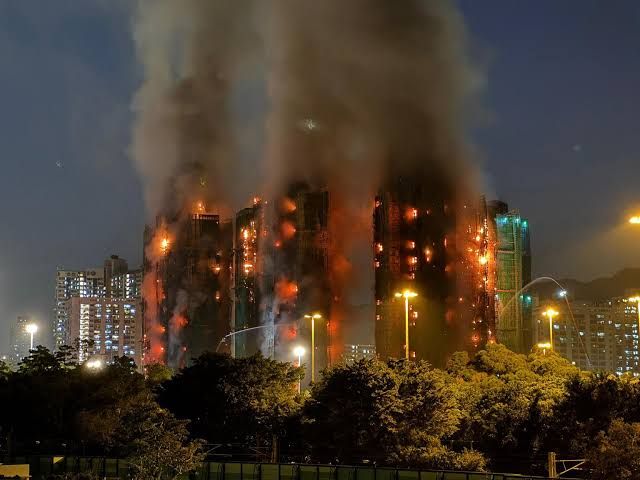
Flames quickly engulfed multiple towers — parts of the complex were under renovation at the time and wrapped in traditional bamboo scaffolding, which fire officials now suspect helped fuel the blaze.
By evening, the fire had already reached a No. 5 alarm (the highest alert level), with heavy smoke billowing across several buildings and rescue operations underway.
🏘️ Human Cost — Lives Lost, Many Missing, Hundreds Displaced
Authorities confirmed at least 44 deaths, including a firefighter, making this the deadliest residential fire in Hong Kong in decades.
Dozens more are injured, many badly burned or suffering from smoke inhalation, while 279 residents remain unaccounted for as rescue crews continue searching through the wreckage.
Over 900 people have been evacuated and moved to temporary shelters as nearby buildings were sealed off for safety.
🧱 Possible Causes & Safety Concerns — What Went Wrong
Initial investigation points to the bamboo scaffolding and exterior renovation materials as key accelerants for the fire’s rapid spread. Bamboo, though traditional, is highly flammable — a major risk in high-density housing.
Authorities have arrested three men — construction-industry personnel — on suspicion of gross negligence / manslaughter related to alleged fire-safety violations during the renovation project.
The disaster has intensified scrutiny on Hong Kong’s longstanding use of bamboo scaffolding even as the city has tried to phase it out in favor of fire-resistant materials.
🆘 Ongoing Rescue Efforts & Government Response
Emergency crews — hundreds of firefighters and dozens of fire engines and ambulances — are still working through the night to extinguish remaining blazes and search for survivors.
Local authorities have launched an official investigation into building-safety compliance, renovation oversight, and regulatory lapses connected to the blaze.
Meanwhile, dozens of displaced residents await relocation, and shelters have been established across Tai Po to accommodate evacuees.
📝 Why This Hong Kong Fire Matters Globally
The tragedy underscores risks inherent in older high-density housing, especially where renovations use traditional materials ill-suited for modern fire safety.
As one of the worst residential fires in recent decades, this incident may force major reforms in Hong Kong’s building codes, renovation oversight, and emergency-response protocols.
For residents, it is a chilling reminder of how quickly disasters can escalate — and how critical fire safety and readiness are in densely populated urban areas.

