
A Rare Celestial Event for Skywatchers and Traditions
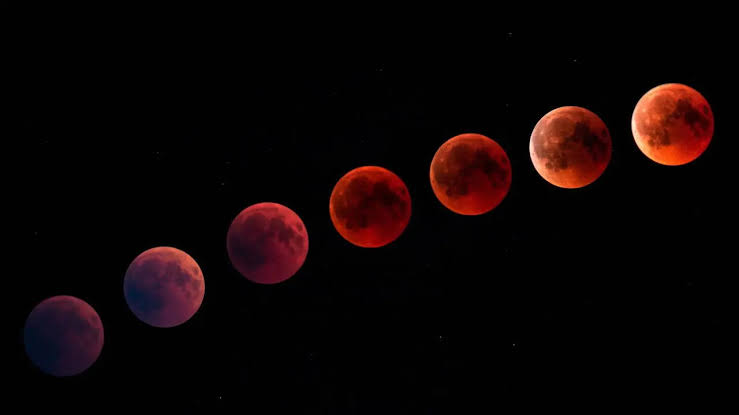
Mark your calendars: the last total lunar eclipse of 2025, also known as a mesmerizing Blood Moon, will grace India’s skies—and much of the globe—on the night of September 7 into the early morning of September 8. Visible across Asia, Australia, eastern Africa, and parts of Europe, this cosmic spectacle promises 82 minutes of totality—a rare and prolonged show of nature.
Astronomical and cultural connoisseurs alike are preparing to witness the Moon don a radiant red hue as Earth’s shadow fully envelops it. This optical marvel results from sunlight refracting through our atmosphere, scattering away shorter wavelengths and painting the Moon with deep crimson tones—a physics-driven “Blood Moon” that’s pure, unfiltered nature.
Timing: Plan Your Viewing
Here’s how the eclipse will unfold according to Indian Standard Time (IST):
Sutak begins (inauspicious period): Around 12:57 PM on September 7—religious activities, cooking, and devotional practices are traditionally avoided during this time.
Penumbral phase begins: Approximately 8:58 PM—the subtle shading of the Moon begins.
Partial eclipse begins: Around 9:57 PM.
Total eclipse (Blood Moon) begins: Around 11:41–11:42 PM.
Totality ends: Around 12:22 AM, with the eclipse wrapping up by approximately 1:26 AM on September 8.
Safe Viewing and Spiritual Practices
A total lunar eclipse is safe to observe with the naked eye—no protective gear required. For a richer experience, consider using binoculars or a camera with a telephoto lens to capture the Moon’s shifting glow.
Cultural Significance and Sutak Traditions
In Hindu traditions, the Sutak period that begins several hours before the eclipse denotes a time of spiritual sensitivity. Activities like worship, food preparation, and temple visits are paused until the eclipse concludes. Some notable temples, however, remain open throughout due to longstanding traditions.
During the eclipse, devotees often perform prayers, rituals, meditation, and charitable deeds, while postponing sacred rites or travel. Once the eclipse ends, customary post-eclipse rituals include bathing, cleaning, temple visits, and offerings, reflecting purification and new beginnings.
Why This Eclipse Stands Out
This isn’t just another lunar eclipse—it’s one of the decade’s longest and most accessible. With its extended totality, widespread visibility across continents, and dramatic Blood Moon effect, it’s both a scientific marvel and a spiritual milestone.
At a Glance
Phase/Event India Time (IST)
Sutak (Inauspicious Start) ~12:57 PM, Sept 7
Penumbral Eclipse Begins ~8:58 PM
Partial Eclipse Begins ~9:57 PM
Total Eclipse (Blood Moon) Begins ~11:41–11:42 PM
Total Eclipse Ends ~12:22 AM (Sept 8)
Eclipse Fully Ends ~1:26 AM (Sept 8)
As the skies align this September evening, the Chandra Grahan 2025 invites awe, reflection, and wonder. Whether you’re watching with a telescope or simply gazing skyward, this Blood Moon is a rare opportunity to experience the enduring collaboration of nature, science, and tradition.

