
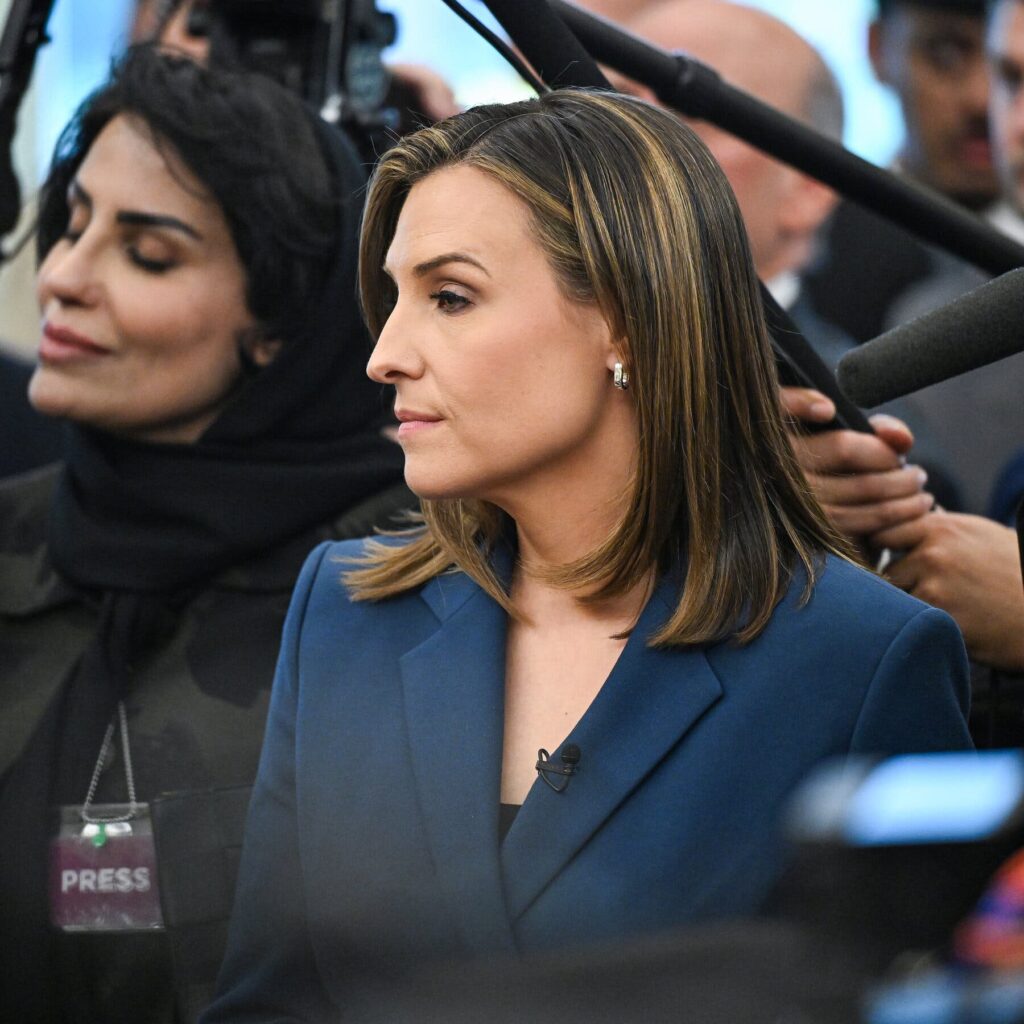
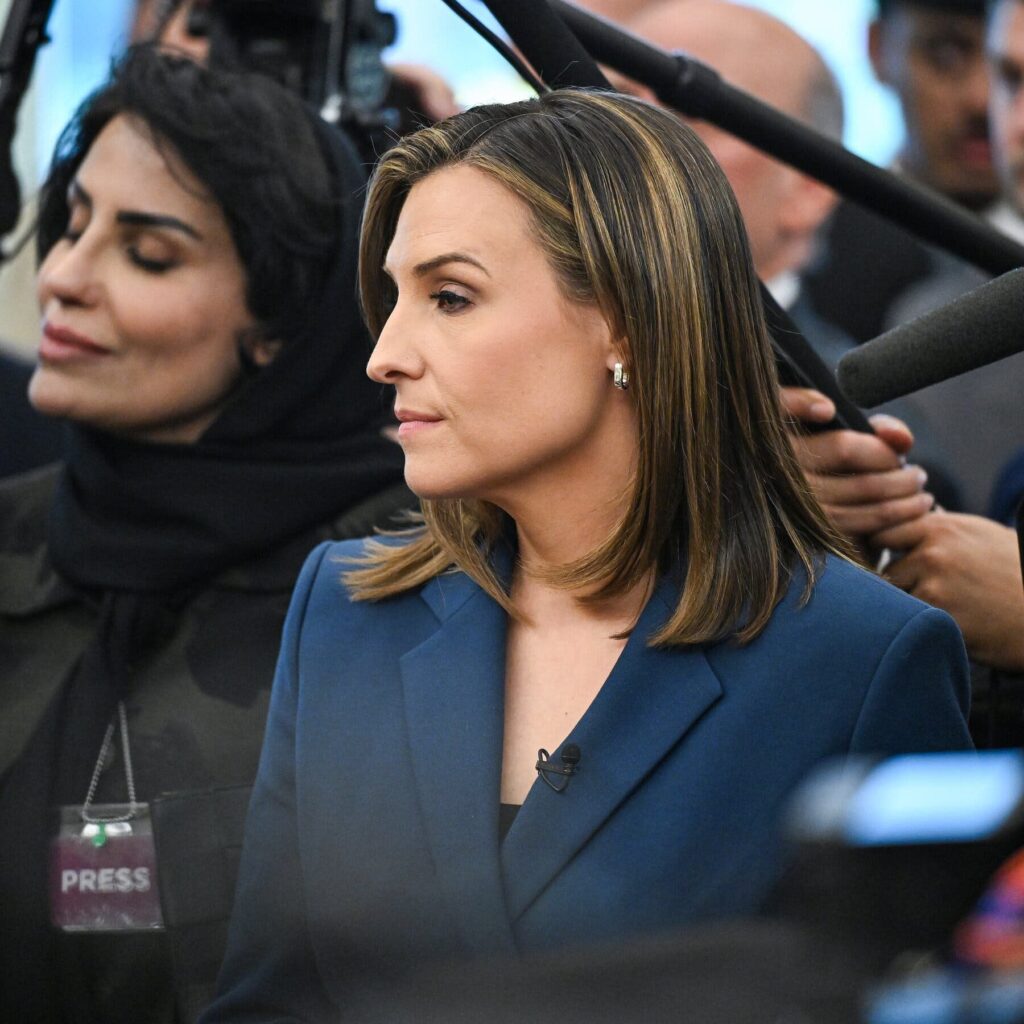
Who Did Trump Call “Piggy”? — Catherine Lucey Targeted Over Epstein Question
In a tense exchange aboard Air Force One, former President Donald Trump sharply rebuked Bloomberg White House correspondent Catherine Lucey, demanding she be “quiet” and calling her “piggy” after she questioned him about the Epstein files. The comment was immediately met with outrage from across the media, with critics calling it a derogatory and demeaning attack on a female journalist.
Bloomberg defended Lucey’s professionalism, saying: “Our White House journalists perform a vital public service … we remain focused on reporting issues of public interest fairly and accurately.”
Trump vs Mary Bruce: “Terrible Reporter” and License Threats
The controversy didn’t end there. On November 18, 2025, Trump again attacked a female reporter — this time Mary Bruce, ABC News’ chief White House correspondent. During a high-profile Oval Office meeting with Saudi Crown Prince Mohammed bin Salman, Bruce pressed Trump on Epstein-related documents and on the Trump family’s business dealings with Saudi Arabia.
Trump responded furiously, calling her “a terrible reporter,” criticizing her tone, and even suggesting ABC should lose its FCC broadcast license. Journalists and media organizations quickly rallied behind Bruce, condemning Trump’s remarks as an attack on press freedom.
Why the “Piggy” Remark and Bruce Clash Matter
The “who did Trump call piggy” question underscores deeper concerns about how Trump treats female journalists — especially those pressing him on sensitive topics like Epstein.
Debate has erupted over decorum, respect in the press, and whether such insults undermine public trust in media institutions.
The incident with Mary Bruce touches on broader political issues, including Trump’s business ties with Saudi Arabia and his response to the Khashoggi killing, linking back to journalistic accountability.
Reactions Across Journalism & Politics
CNN’s Jake Tapper called Trump’s “piggy” comment “disgusting and completely unacceptable.”
Veteran journalists, including Katie Couric and Margaret Sullivan, decried the behavior, saying it was a deeply disturbing example of presidential disrespect toward women in media.
Many reporters and media outlets expressed solidarity with both Lucey and Bruce, defending their right to ask tough but necessary questions.
What Comes Next — Implications for Trump and the Press
Media ethics experts say this could fuel renewed calls for protections for journalists, especially women, in politically charged environments.
Trump’s comments could influence how press conferences and reporter access are handled in the future — including demands for more respectful engagement.
For Lucey and Bruce, this may become a defining moment in their careers, highlighting their courage in raising critical issues despite personal attacks.

